Dyson
Est. 1993James Dyson built 5,127 prototypes of his vacuum — the first from cardboard and tape — and 5,126 of them failed.
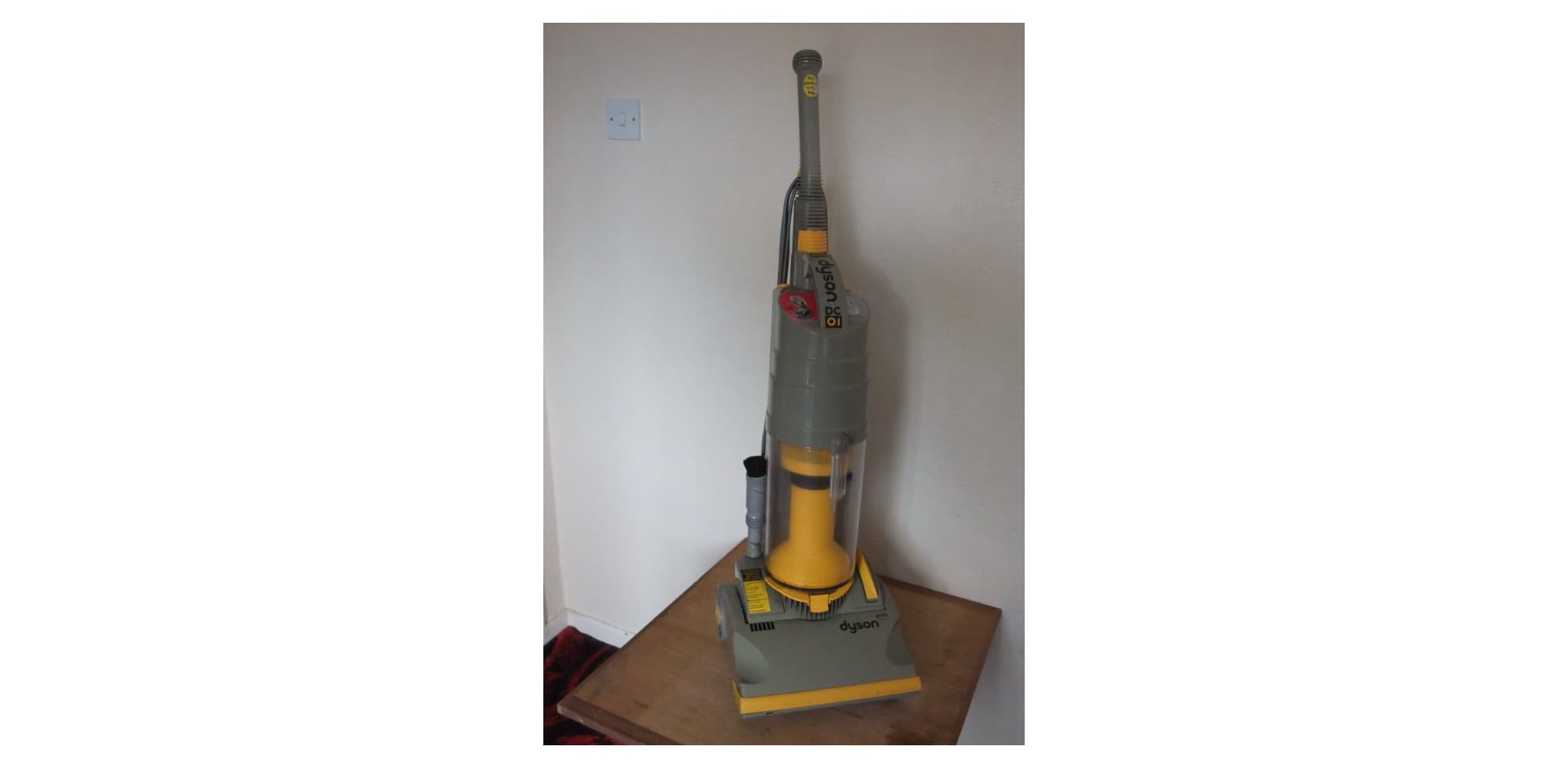 ▶ DYSON · 1993
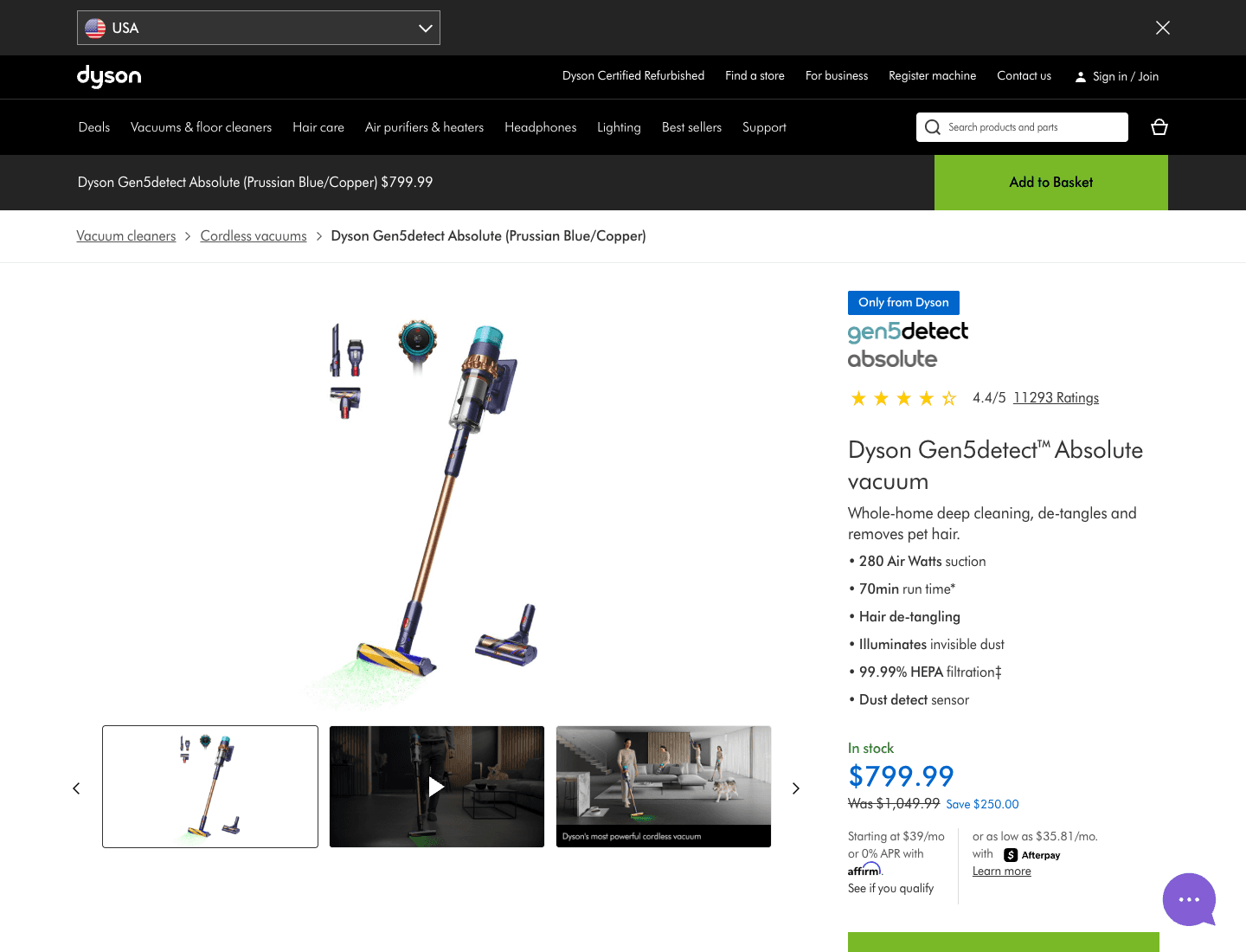 DYSON · 2026 ◀
Drag the handle — Dyson, 1993 → 2026.
Then: DC01 photo by Lankyrider, CC BY-SA 4.0, via Wikimedia Commons. Now: dyson.com.
“I made 5,127 prototypes of my vacuum before I got it right. There were 5,126 failures. But I learned from each one.”— James Dyson, Fast Company (2007)
The ugly part. Frustrated by a vacuum that kept clogging, James Dyson noticed how a nearby sawmill used a giant cyclone to spin sawdust out of the air — so he built a miniature version out of cardboard and gaffer tape and strapped it over his Hoover in place of the bag. It worked. Then he iterated by hand, one prototype at a time, for about five years.
What he shipped anyway. It took 5,127 prototypes before the cyclone worked the way he wanted, and 5,126 of them failed. No established manufacturer would license a bagless vacuum — it threatened their lucrative replacement-bag sales — so Dyson sold it himself, first in Japan, where it shipped as the bright-pink 'G-Force' for around £2,000 a unit.
Now. He poured the royalties into his own machine: the DC01 became the UK's best-selling vacuum within about 18 months, and Dyson grew into a global engineering company — vacuums, hair dryers, fans, robots — built on 5,126 failures and the one that finally worked.